Kingston sits on a complex glacial legacy. The city's 134,000 residents live atop deposits left by Lake Iroquois and the retreat of the Wisconsin ice sheet, creating a patchwork of marine clays, glacial till, and littoral sands that shift dramatically within a single city block. Getting the grain-size distribution right matters, but understanding how a soil behaves with changing moisture is where the real risk lies. We run Atterberg limits testing to quantify the liquid limit, plastic limit, and plasticity index, giving you the numbers that define whether a clay will heave in winter or lose strength during spring thaw. Our Kingston lab processes samples daily, not weekly, so your earthworks schedule stays on track without waiting two weeks for a plasticity report.
A clay with a 40% liquid limit doesn't just get softer when wet, it can double in volume during freeze-thaw cycles, and Kingston sees over 100 of those cycles annually.
Our approach and scope
Site-specific factors
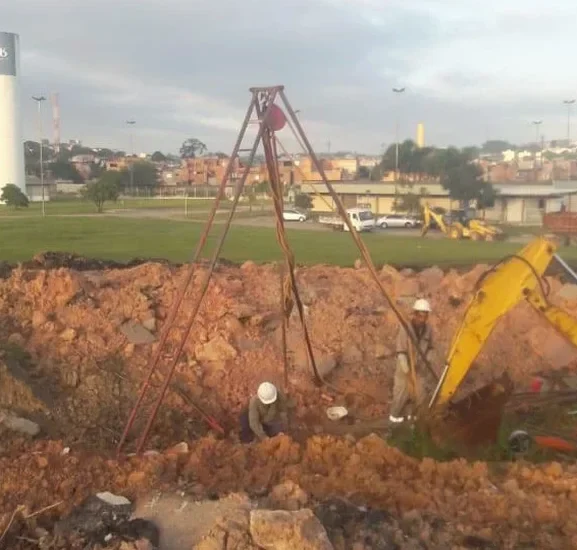
A common mistake we see in Kingston is treating all fine-grained soils as fill material without checking the plasticity index. Contractors excavating Leda clay from a site near the Rideau Trail will stockpile it for reuse, only to find it turns unworkable after one rainfall. A PI above 30% in these marine-origin deposits means the material is highly active and unsuitable for structural backfill unless stabilized with lime or cement. Ignoring the Atterberg limits at the design stage also leads to underestimating lateral earth pressures on retaining-walls in the downtown area, where space constraints mean walls are built tight to property lines. If the retained soil expands with moisture, the wall deflects. If it dries and shrinks, you get settlement behind the wall. Both scenarios trigger costly remedial work that could have been avoided with a $120 lab test and proper soil classification.
Regulatory framework
ASTM D4318-17e1: Standard Test Methods for Liquid Limit, Plastic Limit, and Plasticity Index of Soils, CSA A23.3-19: Design of Concrete Structures (referenced for foundation design interaction with plastic soils), Ontario Provincial Standard Specifications (OPSS) 1010: Material Specification for Aggregates - Base, Subbase, Select Subgrade, and Backfill Material
Related services
Standard Atterberg Limits Suite
Covers liquid limit, plastic limit, and plasticity index on a single sample. Ideal for classification during routine site investigations or to verify borrow source material quality. We report within three business days, with digital PDF and hard copy options.
Moisture Sensitivity Characterization
Includes Atterberg limits plus natural water content and grain-size distribution to compute the liquidity index and activity. Used for predicting swell potential in clay subgrades beneath rigid and flexible pavements across Frontenac County.
Typical parameters
Common questions
What do Atterberg limits testing cost for a project in Kingston?
A standard suite covering liquid limit, plastic limit, and plasticity index on a single sample runs between CA$90 and CA$160. Volume pricing applies for larger site investigation programs with multiple samples. The exact cost depends on whether you need rush turnaround or additional parameters like natural water content and grain-size analysis.
How long does the lab take to report Atterberg limits results?
Our standard turnaround is three business days from sample receipt. We offer a 24-hour rush service for projects on tight timelines, such as confirming backfill suitability before a concrete pour. The sample must be properly sealed in an airtight container to prevent moisture loss during transport, which would skew the plastic limit result.
Can Atterberg limits alone classify a soil for foundation design?
Atterberg limits give you the plasticity characteristics, which are essential for the Unified Soil Classification System, but they don't provide strength or compressibility parameters. For a complete foundation design in Kingston's variable glacial deposits, we pair Atterberg limits with triaxial compression tests or consolidation testing when the plasticity index indicates a highly compressible or sensitive clay.