The drill rig sets up on the Kingston limestone. A 140-pound hammer drops 30 inches, driving a split-spoon sampler into the overburden. We count the blows. That number tells us more than most lab reports ever could. The Standard Penetration Test is straightforward, repeatable, and brutally effective for sites across the Kingston area. Whether you are dealing with glacial till near Lake Ontario or the infamous Leda clay pockets east of the Cataraqui River, we bring the rig, run the test, and deliver data your structural engineer can use the same day. For deeper profiling in the limestone bedrock we often pair SPT with rotary drilling to define the rock head precisely. The rig runs on a compact track mount, so we access tight residential lots in Portsmouth and Sydenham without tearing up the lawn.
In Kingston's Leda clay, a single SPT N-value can change the entire foundation strategy from spread footings to deep piles.
Our approach and scope
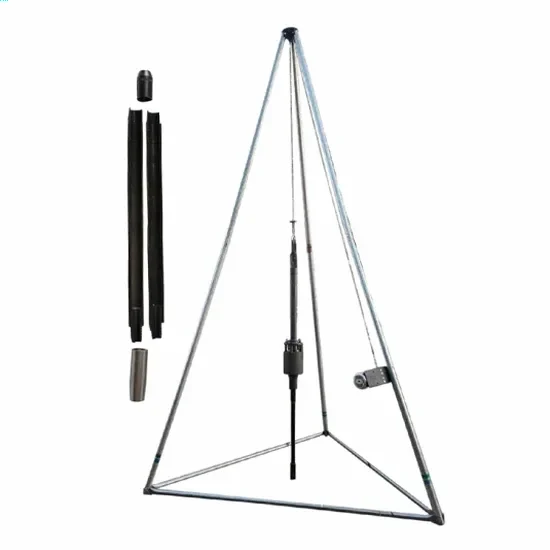
Site-specific factors
NBCC 2015 and CSA A23.3 require site-specific geotechnical data for all buildings in Seismic Category 2 or higher. Kingston lies within the Western Quebec Seismic Zone, where a magnitude 5.5 event has a 10% probability of exceedance in 50 years. Soft Leda clay amplifies ground motion. Skipping the SPT investigation means designing blindly into a soil that can lose 80% of its undrained shear strength during cyclic loading. The risk is not theoretical. The December 2020 magnitude 4.1 event near Cornwall was felt across Kingston and served as a reminder that moderate seismicity demands rigorous subsurface data. Borrow material variability is another risk. Limestone quarries around the city produce fill with wide gradation ranges, and undocumented fill thicknesses over 3 meters are common in the old Inner Harbour industrial zone. An SPT boring through that fill tells you exactly what you are building on and whether stone columns or vibrocompaction are needed before placing footings.
Regulatory framework
NBCC 2015 — Subsection 4.2.4 (Geotechnical Design), CSA A23.3:2019 — Design of Concrete Structures (seismic provisions), ASTM D1586 — Standard Test Method for SPT and Split-Barrel Sampling of Soils, Ontario Building Code O. Reg. 332/12 — Part 4 Structural Design
Related services
SPT Borehole Logging & N60 Reporting
Full stratigraphic log with blow counts, sample recovery, and groundwater observations. Energy-corrected N60 values provided for direct use in bearing capacity and settlement calculations.
Combined SPT + Laboratory Testing Package
SPT samples sent to our accredited lab for grain size distribution and Atterberg limits. Useful for classifying Leda clay sensitivity and selecting appropriate foundation depths.
Typical parameters
Common questions
How much does an SPT boring cost in Kingston?
A single SPT boring to 10 meters depth in Kingston typically runs between CA$730 and CA$940, including the field log, N60 corrections, and a summary report. The final number depends on access conditions, traffic control requirements, and whether we hit early bedrock refusal. We provide a fixed quote before mobilizing the rig.
How deep do you typically drill for an SPT in the Kingston area?
Most residential and light commercial borings go to 10 or 15 meters. In the downtown core near the Inner Harbour, we often hit limestone bedrock at 3 to 6 meters. East of the Cataraqui River, where Leda clay extends deeper, borings may reach 20 to 25 meters before refusal. We adjust depth based on the Ontario Building Code requirements for the proposed structure.
How long does it take to get SPT results?
The field log and blow count summary are available the same day the boring is completed. A full geotechnical report with N60 corrections, soil classification, and foundation recommendations takes 3 to 5 business days. We can expedite if your permit application has a deadline.
Is the SPT suitable for Kingston's limestone bedrock?
The SPT sampler is designed for soil, not rock. Once we hit competent limestone, the test stops and we log the refusal depth. For rock mass characterization, we switch to rotary coring. The SPT gives you the overburden profile, which is what determines foundation type and excavation support requirements.